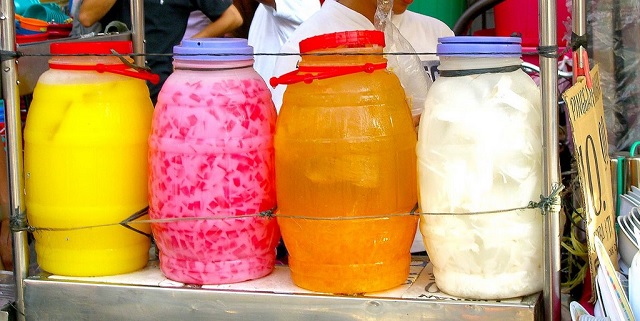
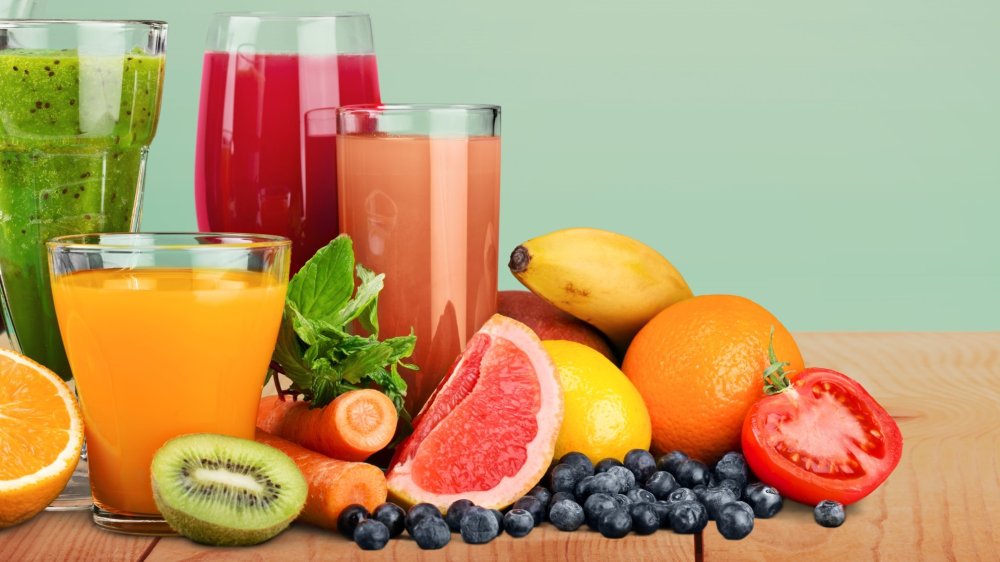
The Philippines is a Southeast Asian country in the western pacific. It is comprised by more than 7,00 islands. It has a wide variety in terms of foods and drinks. Now we will look at the Top 3 famous Filipino Food and Drinks.

——————————FOODS—————————
TOP 3: SISIG
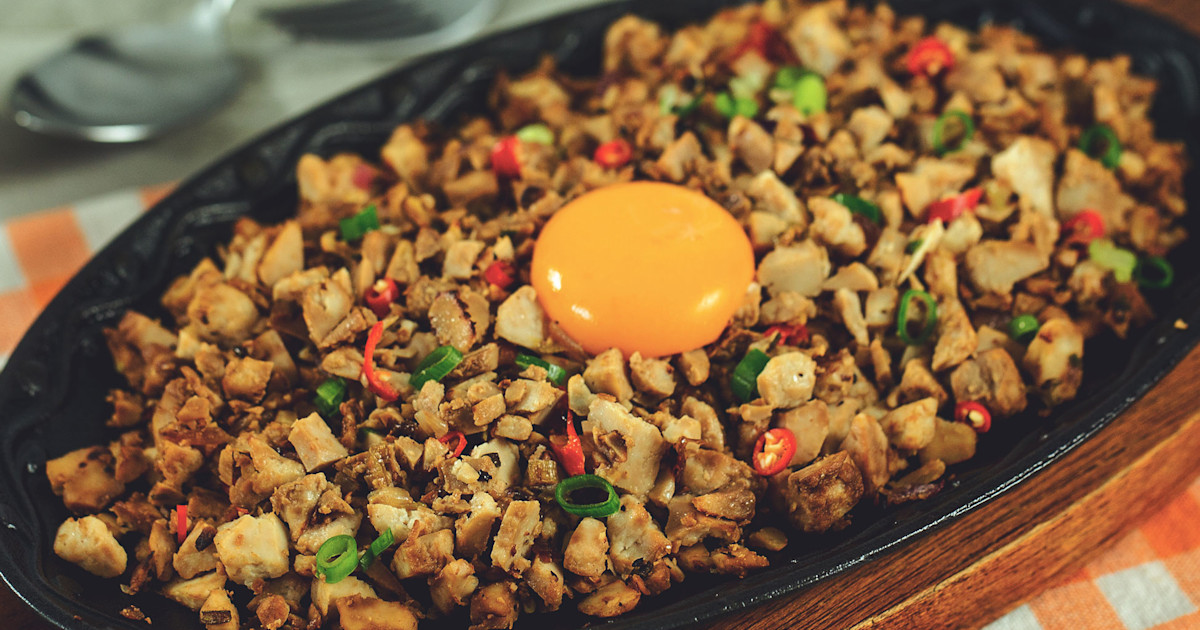
It is one of Filipino dishes that Filipino loves to eat mostly for “pulutan”. It was commonly made from parts of pig head and liver and usually seasoned by calamansi and chili peppers.
Lucia Cunanan of Angeles City, also known as “Aling Lucing” has been credited for reinventing sisig. They call her as “Sisig Queen” for her trademark that was made in mid-1974. She served a concoction of boiled and chopped pig ears and cheeks seasoned with vinegar, calamansi juice, chopped onions and chicken liver and served in hot plates.
Sisig comes into three phases: Boiling, Broiling and Grilling. A pig’s head is first boiled to remove hairs and to tenderize it. Portions of it are then chopped and grilled or broiled. Finally, coarsely chopped onions are added and served on a sizzling plate.
There are different Variations of Sisig nowadays. Some add eggs, ox brains, chicharon , pork or chicken liver, and mayonnaise. Recently, local chefs have experimented with ingredients other than pork such as chicken, squid, tuna, and tofu.
Sisig comes in different varieties:
-CHORIZO SISIG
-CITRUS TUNA SISIG
-PANCIT SISIG
-CARBONARA SISIG
-INASAL SISIG
TOP 2: SINIGANG
Sinigang is one of the favorite viand of all Filipinos. It is a Filipino soup or stew characterized by its sour and savoury taste most often associated with tamarind. It is often related to the Malaysian dish called singgang.
Thus, in Visayas and Mindanao region it may vary in taste because they add ginger as an additional ingridient. Fish sauce is a acommon condiment for the stew.Sinigang is traditionally tamarind-based.
Variations of the dish derive their sourness from ingredients such as guava, calamansi, kamias, santol or unripe mango. Seasoning powder or bouillon cubes with a tamarind base are commercial alternatives to using natural fruits. Meat in sinigang (e.g., fish, pork, beef, shrimp, or chicken) is often stewed with tamarinds, tomatoes, garlic, and onions. Other vegetables commonly used in the making of sinigang include okra, taro corms (gabi), white radish (labanós), water spinach (kangkóng), yardlong beans (sitaw) and eggplant (talóng). Most Filipinos like to cook sinigang with green long peppers in order to enhance the taste and add a little spice to the dish. Another variation includes adding locally made miso.
Sinigang comes from different variety:
-SINIGANG SA MISO
-SINIGANG SA MANGGA
-SINIGANG NA HIPON
-SINIGANG SA KALAMANSI
TOP 1: ADOBO
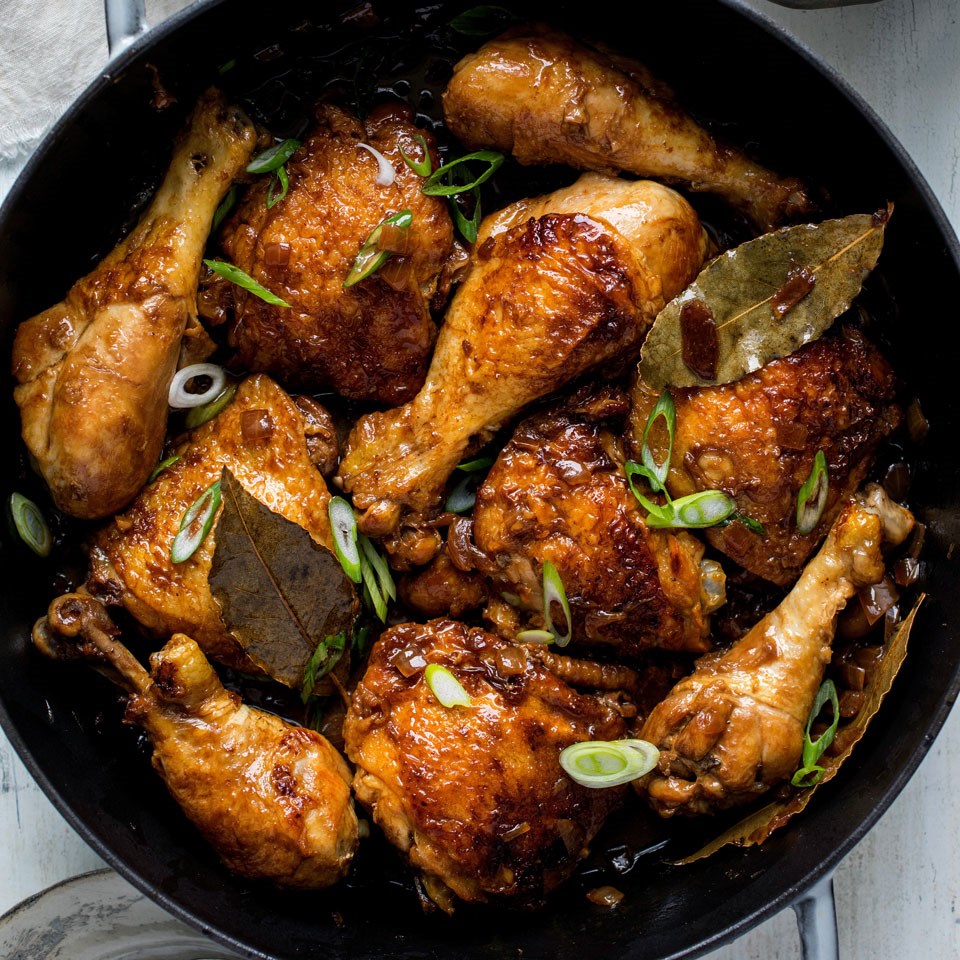
It is the most popular viand in the Philippines. It comes from the Spanish word ‘adobar” meaning marinade. is a popular Ilocano dish and cooking process in Filipino cuisine that involves meat, seafood, or vegetables marinated in vinegar, soy sauce, garlic, and black peppercorns, which is browned in oil, and simmered in the marinade.
The most basic ingredient of adobo is vinegar. It may be a rice vinegar, coconut vinegar or cane vinegar.
A rarer version of a dobo is what they called as “adobong puti” or “blond adobo”. It only uses salt as an alternative for soy sauce that is typically used in “adobong itim”. It is said that it is the closest adobo in the Pre-Hispanic version of adobo.
Adobo is also similar to a dish known as “pinatisan” where patis (fish sauce) is used instead of vinegar.
In a small pot, adobo is where it is traditionally cooked but nowadays we used metal pots or kawali instead.
Adobo comes in different variety:
-ADOBONG ITIM
-ADOBONG PUTI
-ADOBO SA BUKO
-ADOBO SA GATA
——————————-DRINKS————————
TOP 3: LAMBANOG
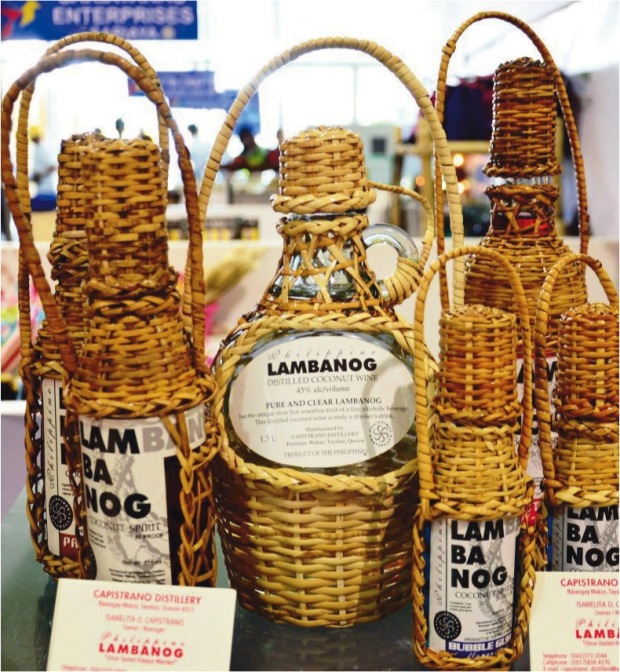
It is a distilled alcohol drink that is produced in Indian Subcontinent and Southeast Asia. It may be made from either the fermented sap of coconut flowers, sugarcanes, grain or fruit. Describe as coconut wine or vodka.
The Filipino term for wine (and by extension alcoholic beverages in general) is alak, derived from the Arabic word “arrak”. The term “arak,” though, is specifically used in Ilocano.
It typically contains an alcohol content of 80 to 90 proof or (40% to 45%) after a single distillation and may go as high as 166 proof (83%). The sap is harvested into bamboo receptacles similar to rubber tapping, then cooked or fermented to produce a coconut toddy called tubà. The tubà, which by itself is also a popular beverage, is further distilled to produce lambanóg.
Quezon City is the major producer of lambanog wine in the Philippines because of the abundance of coconut plantations in the area. The Lambanog originated and first distilled in Tayabas in Quezon, a Spanish soldier named Alandy established the first distilling business, which has come down to the present generation as Mallari Distillery. The three main distilleries in the country are also located in Tayabas City – the Mallari Distillery, the Buncayo Distillery, and the Capistrano Distillery (Vito, 2004).
TOP 2: KAPENG BARAKO

Kapeng Barako is a coffee varietal grown in the Philippines, particularly in the provinces of Batangas and Cavite. It belongs to the species Coffea liberica. The term is also used to refer to all coffee coming from those provinces. Barako is the Philippine term for the male stud of an animal, itself taken from the Spanish varraco, and has become associated with the image of a tough man.
Kapeng barako is prepared using a drip brewing device, French press, or by simply pouring hot water unto the grounds and filtering the mixture using a piece of cloth. Barako is best sweetened with honey or brown sugar. Barako can be used to make espresso and other espresso-based drinks.
Kapeng Barako is also used as a scrub in spa and can be alternative to soup as part of the rice dish. Usually used in eating dried fish.
It is also produced in Malaysia. Some farmers sells it to the tourist market or locally. It is not exported because of the small dealers in there country.
There is no consensus on Barako. Some see it as a bean of the past, whereas others wish to honor their heritage and bring its story back to life.
Earl Queron of Coffee Empire believes Manila’s specialty coffee scene is evolving so fast Barako could find a place, if third wave cafés were willing to experiment with it in their offerings.
TOP 1: JUICES AND SAMALAMIG